Sleeves That Move With You: A Home Test for Pitch, Depth and the Humble Gusset

Photo: dressmaker pinning calico toile sleeve fitting on dress form in sewing studio, via civilwardaviskillian.weebly.com
There is a specific disappointment that arrives the first time a new make meets a real day. In front of the mirror, arms hanging quietly by your sides, everything looked right. Then you got into the car, reached for the handbrake, and felt the entire shoulder rise up like a shrug you never asked for.
That sort of grumble is almost impossible to diagnose standing still. It is a movement problem, and the toile is where you want to find it — not after you have cut into the wool you spent three months saving for.
The mirror only ever shows you one pose
A fitting room, and by extension your own bedroom mirror, asks you to do the least demanding thing a body can do: stand. Arms down. Weight even. Nothing pulling anywhere.
Real life is not like that. Real life is dragging a bag for life up the front steps, hoisting a suitcase into an overhead rack, holding a squirming toddler on one hip, or reaching past a stranger for the rail as the 07:52 lurches out of the station. Every one of those actions asks the sleeve to do something the mirror never tested.
So the first rule of sleeve fitting is simple: stop assessing sleeves standing still. Sit down, reach up, reach forward, and see what happens.
Pitch: the angle nobody tells you about
Sleeve pitch is the angle at which the sleeve hangs relative to the body. It is set when you draft or alter the sleeve head, and it is the single biggest cause of that twisting, corkscrewing feeling down the outside of the arm.
Most of us do not have shoulders that sit square and level. We spend our days at keyboards, at steering wheels, at kitchen counters, and the result is shoulders that roll slightly forward. A sleeve drafted to hang perfectly vertically will look immaculate on the hanger and then twist the moment it goes on a real, forward-rolling shoulder.
How do you spot it? Look for diagonal drag lines running from the shoulder towards the elbow on the front or back of the sleeve, and check whether the underarm seam wants to swing forward or backward instead of sitting where you drafted it. If the sleeve head feels tight at the front while the back has spare fabric, that is pitch talking, not size.
The good news is that pitch is adjustable without redrafting. On a toile, pinch a wedge at the shoulder seam — a centimetre or so, tapering to nothing at the armscye — to rotate the sleeve forward or back, pin it, and try the movements again. When the drag lines calm down, you have found your pitch.
Armscye depth: the Goldilocks measurement
If pitch is about angle, armscye depth is about room. Too shallow and the sleeve grips the armpit, restricting your reach and pulling the whole bodice up when you raise an arm. Too deep and you get a wonderfully free arm attached to a garment that sags under the arm and looks, frankly, a bit apologetic.
A useful test is the hand-on-opposite-shoulder reach. If the side seam lifts more than a couple of centimetres, your armscye is probably too shallow for comfortable movement. If the fabric pools and hangs in a soft triangle under the arm, it has gone too far the other way.
Do this one in the layers you actually plan to wear. A shirt drafted over a thin camisole behaves very differently once you add a jumper, and a November coat fitting is a completely different exercise from a July one.
When a gusset is the kindest fix
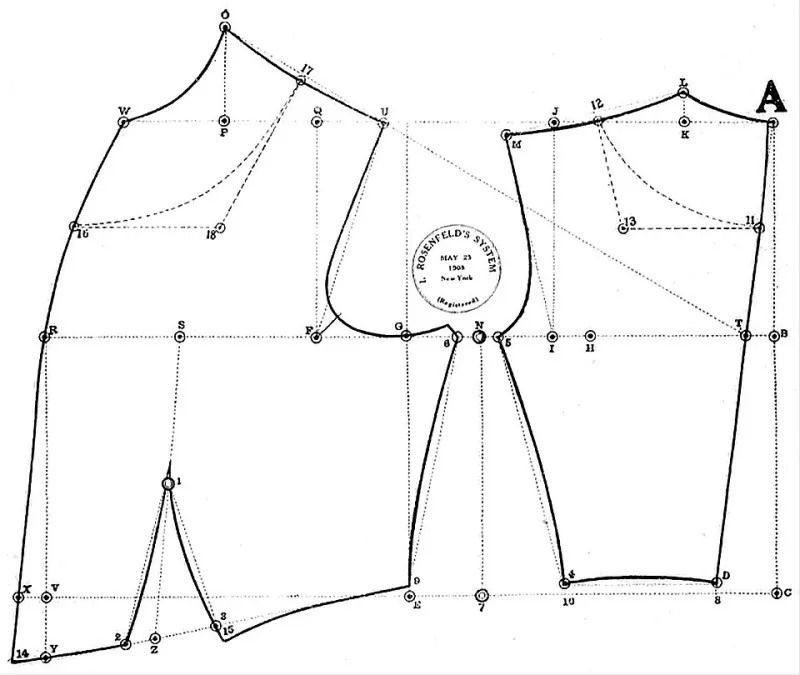
A gusset is a small insert — diamond, square or teardrop — set into the underarm to buy back movement. It has a slightly old-fashioned reputation, which is unfair. On a close-fitting sleeve with a high armscye, a gusset is often a far more elegant solution than dropping the armhole and losing the shape you loved in the first place.
Think of the garments where it earns its keep: workwear, shirts with a fitted upper arm, close-cut coats, anything you intend to reach, lift or drive in. A gusset gives the arm room to swing forward without dragging the whole bodice with it.
You can test the idea before committing. Cut a slit into the underarm of your toile, pin a scrap of fabric behind it in a diamond shape, and repeat the movement tests. If the pull vanishes and the garment suddenly feels like it belongs to you, you have your answer. Bear in mind a gusset will not fix pitch — if the sleeve is twisting, sort that first, then decide whether extra room is still needed.
A simple home routine worth doing every time
Set aside twenty minutes and a cheap calico toile, and give the sleeve a proper audition before the good fabric is anywhere near the table.
- Cut generously. Leave 2cm at the armscye seam so you have room to pin and re-pin without chasing the raw edge.
- Dress for the occasion. Put on the underlayers you will realistically wear with the finished garment.
- Run six movements. Sit and reach forward as if for a handbrake. Reach a high shelf. Put on a coat over the top. Carry a loaded tote on that shoulder. Reach overhead for a rail. Give someone a hug.
- Note where it pulls, not just that it pulls. Front of the shoulder means pitch one way, back means the other. Digging at the armpit is depth. A taut sleeve cap is cap height.
- Adjust on the body. Pin, move again, unpin, re-pin. Repeat until the drag lines soften.
- Photograph your back. It is astonishing what a phone camera catches that a mirror hides.
None of this takes long, and all of it is cheaper than a garment that lives in the wardrobe because putting it on feels like a small wrestling match. Bespoke sewing is not about drafting a perfect technical sleeve; it is about drafting a sleeve for the body that actually wears it, on the days it actually gets worn.