The Garment That Stays Whole: Drafting a Pattern From a Family Favourite
Photo: vintage family garment laid flat with tracing paper sewing measure and notebook, via i.pinimg.com
There is a garment in many families that no one quite wears and no one can throw away. A grandad's work shirt with a worn collar. A mother's Liberty print blouse, faded at the shoulders. A home-knitted cardigan that smells faintly of a cupboard and a person. The instinct, for a dressmaker, is to unpick it and use it as a pattern. Please do not — at least not yet. You can draft a pattern from a beloved garment without cutting a single stitch, and the result will be richer for it.
This is slow sewing of a different kind. It is part measuring, part remembering. The aim is not a perfect clone. It is a pattern with the garment's DNA: its collar shape, its pocket placement, its particular ease. The original stays whole, and the new make carries the story forward.
The original is evidence, not material
Old garments are documents. They show how someone stood, how the fabric wore, where the elbows thinned, where a seam was let out or taken in. Unpicking can damage brittle fibres, break old thread, and lose the very information you need. Seams leave impressions. Hems carry the mark of a previous length. A mended tear is part of the story.
Treat the garment as an archive. If it is fragile, handle it with clean hands and lay it flat rather than hanging it. Do not iron it directly if the fabric is old or heat-sensitive; use a pressing cloth and a cool iron, or simply smooth it with your hands. Store it afterwards with acid-free tissue, away from damp and direct sun.
Tracing without trauma
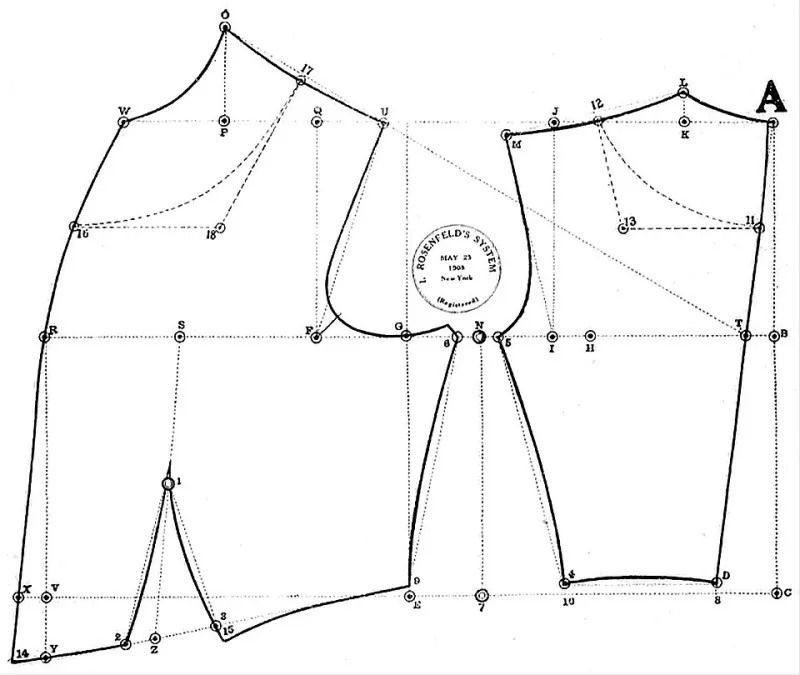
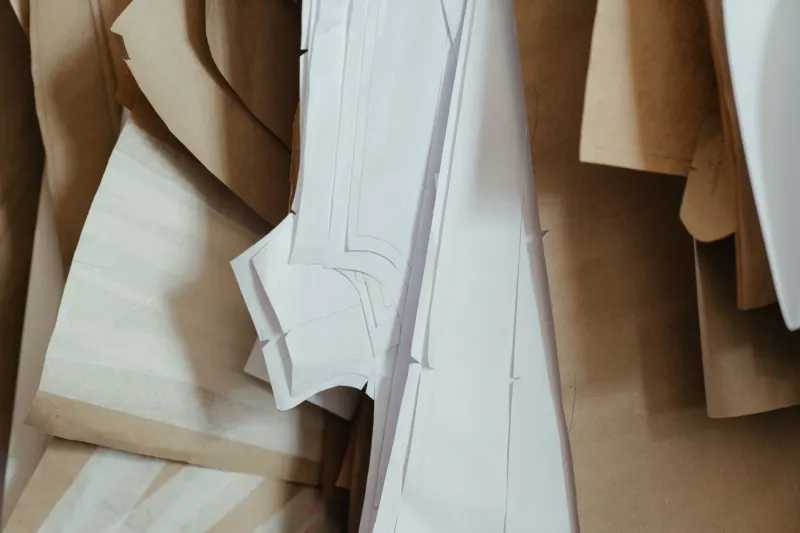
Clear a large table and lay the garment flat. Do not stretch it to make it behave. Use weights rather than pins to hold tracing paper in place, especially on delicate or knitted fabrics. Trace the stitching lines, not the cut edges. Those stitching lines are the real shape of the garment; the edges may have frayed, been trimmed, or stretched.
Mark the grainline by following the original grain or by checking how the garment hangs. Note the darts, pleats, tucks, and notches. Trace the front and back separately, and do not assume symmetry — check it. If the garment is lined, the lining can be a useful map, but it may also have stretched differently from the outer fabric. Measure both and compare.
Photograph the garment flat with a ruler or measuring tape alongside it. Take close-ups of the collar, cuffs, pockets, and any interesting construction details. These photographs will be your reference when the original goes back in the cupboard.
Measuring a garment that has already lived
Wear changes a garment. A seat can stretch, a waistband can relax, a shoulder seam can shift. Measure across consistent points and measure more than once. For a bodice, compare left and right at the chest, waist, and hip. Measure seam to seam rather than edge to edge. Note any areas that look stretched or shrunken, and average your readings rather than trusting a single number.
Work out the original seam allowance by measuring from the stitching line to the cut edge. It may be 1.5 cm, or it may be something entirely different. If the edge is worn, assume a standard allowance and write that down. Record the fabric type too: woven or jersey, stable or stretchy, crisp or drapey. A jersey garment may have been designed with negative ease; a woven shirt will have positive ease. That information changes how you adapt the pattern.
Making it fit a new wearer
A pattern drafted from an old garment is not automatically the right size for a new body. Start with the new wearer's measurements and the ease you want, then use the original as a style reference. You might need to grade between sizes, adjust the shoulder, shorten or lengthen the sleeve, or move a dart. If the original is much smaller than the new wearer, add width at the side seams or through a yoke rather than simply sizing up every piece and losing the shape.
Make a toile in a fabric with a similar weight and drape. Check it seated, standing, and reaching forward. Look at the back neckline and the armhole; these are the areas where a copied garment most often needs adjustment. Keep the details that make the original recognisable — the collar stand, the patch pocket, the topstitching — but let the fit belong to the person who will wear it.
A pattern with provenance
When the pattern is drafted, make it into an archive in its own right. Label each piece with the garment name, the date, and a note such as: drafted from Nan's Liberty blouse, original not cut. Write a small booklet or envelope insert with a photograph of the original, the owner's name, the approximate date of the garment, the fabric, the measurements you took, and any changes you made for the new wearer.
If you are making the new garment as a gift, sew a small label inside: After Nan, 2026, or From Grandad's shirt. It is a quiet way of saying that this is not a copy; it is a continuation. Scan or photograph the traced pattern pieces for backup, and store the paper pattern flat with acid-free tissue. The original can go back to its box, still whole, still carrying its own history.
The first garment you make from an inheritance pattern may not be perfect. It may need a second toile, a tweak at the shoulder, a different button. That is fine. You are not trying to freeze a person in fabric. You are learning the shape of a story and giving it a new life, with room to move.