The Winter Layering Equation: Fitting Bespoke Patterns for a Proper British Cold Snap
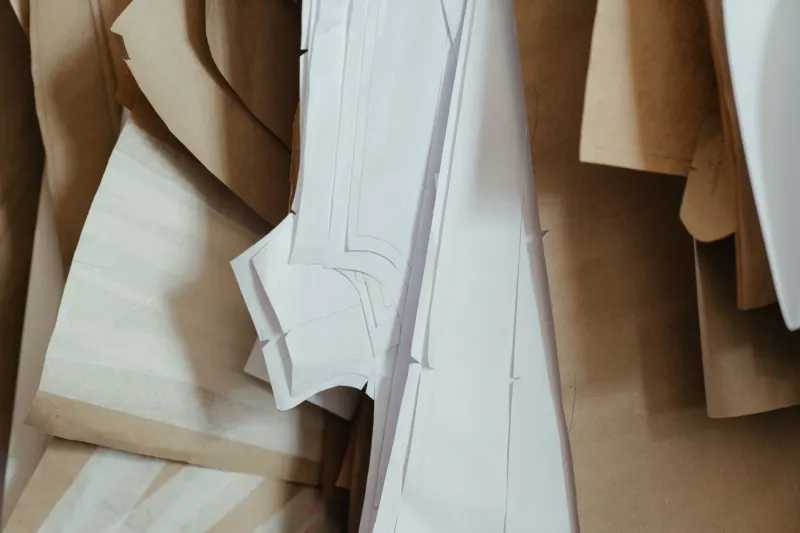
November 2026 has already delivered that familiar British party trick: a mild morning, a biting afternoon and a bus shelter cold enough to make you rethink every lightweight coat you own. If you sew your own clothes, this is the moment when pattern fitting gets real. A garment that skimmed beautifully over a T-shirt in September can turn into a straitjacket the second you add a merino base layer and a chunky jumper.
The answer is not to size up blindly and hope for the best. It is to fit for the layers you actually wear. Below is a practical route through mock-ups, seam allowances and pattern alterations, written for dressmakers who want warmth without losing the shape they fell in love with.
Measure the layers, not just the body
Start with the clothes you genuinely reach for between November and March: a thin thermal top, a fine-gauge knit, a thick sweater, a scarf, maybe a gilet. Put them on together, then take your measurements again. A pattern that fits your bare body is only the beginning; for winter pieces you need to account for what sewists call layering ease.
Compare the pattern’s finished garment measurements with your layered measurements, not the envelope size. A UK size 14 coat pattern might have enough ease over a blouse but not over a cable knit. For a coat worn over a chunky jumper, look for several centimetres of extra room across the upper back, bust and bicep. For a shirt or pinafore worn over a thin roll-neck, you need less, but the armhole still has to allow movement without pinching.
Write the layered numbers on a sticky note and keep it with the pattern. It sounds fussy; it saves hours.
Build a toile you can ruin
A calico toile is not glamorous, but it is the most honest fitting tool you have. If calico feels too crisp for knitwear, use an old duvet cover or a charity-shop sheet with a similar drape. Make up the bodice, sleeves and relevant seams without worrying about facings or finishes.
Then wear the toile over your full layer stack. Reach forward as if lifting a kettle, sit down, drive an imaginary car, hug someone, and check the back neckline in a mirror. Drag lines tell you where the garment is fighting you. If the back pulls when you reach forward, add room across the upper back or at the sleeve head. If the front gapes over a jumper, consider a centre-front closure adjustment rather than simply adding width at the side seams.
Before-and-after example: a modern swing coat pattern in size 16 looked generous on the hanger but strained over a chunky lambswool jumper. The toile showed pulling across the upper back and a tight bicep. Adding 1.5 cm to the centre back and 1 cm to each sleeve seam made room without turning the coat into a sack. The waist stayed put, so the shape survived.
Seam allowance is your flex zone
One of the simplest ways to make a bespoke pattern layer-proof is to plan for adjustment. On a winter toile, use 2 cm seam allowances at the side seams and sleeve seams, then grade back to your usual 1.5 cm once the fit is right. This gives you room to let out a garment if you later want to wear it over a heavier knit.
Do not assume that sizing up is the same as adding layering ease. Sizing up adds length and width everywhere, including the neckline and shoulders, which may then need correcting. It is often cleaner to start with your usual size and add room where the layers demand it: across the upper back, through the bicep, at the side seams and, for crossover coats, at the centre front.
Before-and-after example: a vintage 1960s coat pattern assumed a slimmer underlayer than most of us wear today. The shoulders were fine, but the armhole was high and the sleeve was narrow. Rather than recutting the whole coat, the dressmaker lowered the armhole slightly, added a small underarm gusset and widened the sleeve seam. The result kept the vintage silhouette while allowing a fine knit underneath.
Where to add room, and where to preserve shape
Winter alterations work best when they follow the grain of the design. Add room at the side seams, the centre back and the sleeve seams. Use a vertical seam or a princess seam to shape the extra width rather than letting it pool at the waist. If a coat has a belt or a back tab, check that the extra room does not make the belt sit strangely.
Be cautious about adding width at the neckline or shoulder unless the toile proves it is needed. A collar that stands away from the neck lets cold air in, and a shoulder seam that slips off the shoulder looks unintentional. For raglan sleeves, check the shoulder point and the underarm curve carefully; for set-in sleeves, the sleeve head needs enough room to sit over a knit without collapsing.
And remember the lining. If you add room to the shell, give the lining matching ease, or it will pull the coat in from the inside. A pleat at the centre back lining is a useful winter detail; it gives you room to move without adding bulk to the outside.
The layer-check checklist
Before you cut the final fabric, run through this list with your toile on over your real winter layers:
- Base layer: thermal top or thin merino, sleeves not bunching at the wrist.
- Mid layer: jumper or cardigan, neckline sitting comfortably under the garment.
- Outer layer: scarf and coat if the garment is a jacket or pinafore.
- Arms: raise them overhead, reach forward and bend the elbow. No severe pulling at the bicep or back.
- Seat: sit down and cross your legs. Check that the hem does not ride up awkwardly.
- Front closure: can you fasten it without straining? Does it gap over the bust or tummy?
- Back neck: does it sit close without choking when you turn your head?
- Mirror check: look for drag lines, especially from shoulder to bust and across the upper back.
Save this as a one-page layer-check checklist and keep it with your pattern. It is faster than remaking a coat in January.
Vintage versus modern patterns
Vintage patterns can be wonderful for winter coats, but they often assume different underwear and fewer layers. Check the finished measurements and expect to add room in the sleeve and upper back. Modern indie patterns usually include more wearing ease, but ‘more’ is not the same as ‘enough for a chunky knit’. Always compare the finished garment measurements with your layered body measurements.
With both types, trace your adjusted pattern onto fresh paper and label the changes. Future you will be grateful when you want to make the same coat in a lighter cloth or a different season.
Winter sewing should feel like armour against the weather, not a compromise on shape. Fit the layers, respect the seams, and your bespoke patterns will earn their place by the front door all season.