The Sitting Fit Audit: Trousers That Behave at a Desk, in a Car and on a Train

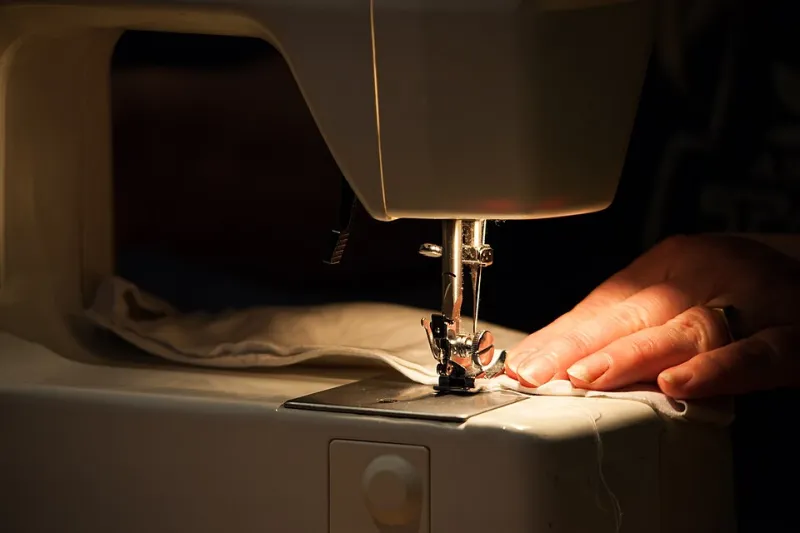
Photo: seamstress pinning trouser toile on seated woman at desk sewing studio, via wp.scoopwhoop.com
Trousers are usually fitted standing up. You stand in front of the mirror, pin a little here, smooth a little there, and decide the toile is nearly there. Then you sit down at your desk, fold yourself into the car, perch on a train seat, and discover the truth. A pair can look impeccable upright and still be a small act of endurance by eleven o'clock. The chair is where a trouser pattern earns its keep.
That is not a failure of your sewing. It is a failure of the test. Standing measurements tell you about length and circumference, but they miss the geometry of a body that bends, spreads and compresses. For trousers, the seated body is not an edge case. It is a huge part of the day.
Why standing measurements miss the point
When you sit, your pelvis rotates, your thighs press into the seat, your seat spreads and your waistband shifts. A pattern that has been drafted only around a standing figure can end up with too little room where you need it and too much where you do not. The result is usually familiar: a back waistband that gapes, a fly that pulls, pockets that flare open, or a knee that grips the moment you bend.
Four pattern details do most of the work here: seated rise, seat depth, crotch curve and knee break. None of them can be judged properly while you are standing still.
The four details that decide seated comfort
Seated rise
Seated rise is the distance from the waistband to the chair when you are sitting. If it is too short, the waistband digs in and the front fly strains. If it is too long, fabric pools in your lap and the crotch hangs low. Your standing rise may look fine while your seated rise is quietly doing damage.
Seat depth and the back curve
Seat depth is about how much fabric wraps around and under the seat. Too little, and the back seam strains, pockets gape and the centre back pulls down. Too much, and you get folds under the seat or a droopy back rise. It is a balance, not a number to force.
Crotch curve
The crotch curve is not just a length. It is a shape. A shallow curve can create pull lines radiating from the crotch, while an over-deep curve can sag. The right curve follows the body from front to back without cutting in or hanging loose.
Knee break
The knee break is where the trouser leg bends. A narrow leg with a high break can feel fine standing and awful sitting. Extra width at the knee, or a slightly lower break, can transform how trousers feel when you are folded into a chair.
The three-chair test
Make your toile in calico or an old cotton sheet. Put in the waistband, fly and pockets, because those are the details that reveal strain. Wear the shoes you would actually wear with the trousers. Then test in three places, because each one asks something different of the pattern.
At the desk
Sit at your desk for a good twenty minutes. Type, reach for a mug, twist to pick something up from the floor, cross your legs if that is what you normally do. Look for a back waistband that lifts away from the body, horizontal pull lines across the front fly, pocket bags that show, or fabric that strains across the seat. Mark every pinch and pull with chalk or a pin. Do not smooth the fabric with your hand and call it fine. Real life does not smooth.
In the car
Sit in the driver's seat with your feet on the pedals and your hands on the wheel. Reach for the gear stick, check over your shoulder, and sit for a few minutes without adjusting yourself. The car test is brilliant for catching a crotch curve that is too shallow, a front rise that is too short, or a back waistband that dips when you lean forward. If you do not drive, borrow a passenger seat and do the same reaching and twisting.
On a train or bus
Train and bus seats are firmer and often more cramped than a kitchen chair. Sit with your knees together, then cross your legs, then rest a bag on your lap. Check the back seat seam, the knee break and the pockets. A bench seat will find things a soft armchair politely hides. If the trousers dig behind the knee or strain across the thigh when you cross your legs, the pattern is telling you something.
Reading the pinch points
| What you see when seated | What it often means | A sensible pattern adjustment |
|---|---|---|
| Back waistband gapes | Back rise is short or the seat angle is too upright | Add length at the back rise and reshape the seat curve |
| Front fly pulls into horizontal creases | Front rise is short or the crotch curve is shallow | Add front rise length and scoop the curve slightly |
| Fabric strains across the seat and pockets gape | Seat depth or back width is insufficient | Add a little to the back seat width and deepen the curve |
| Crotch sags or folds when seated | Too much rise or an over-deep curve | Reduce rise length or flatten the curve carefully |
| Knee pulls tight when bent | Knee is too narrow or the break sits too high | Add knee ease and test a slightly lower break |
| Fabric bites behind the knee | Back knee width or break position is off | Add a small amount of width and adjust the break |
Use the table as a starting point, not a diagnosis. Change one thing at a time, then sit down again. A trouser toile is not finished until it has been sat in.
Adjusting the pattern without starting over
Most seated-fit problems can be fixed with small, targeted changes. Add a wedge to the back rise if the waistband lifts. Scoop the crotch curve if the front pulls. Add a little width through the back seat if the pockets gape. Add knee ease if the leg grips when you bend. Keep notes on the toile itself, because you will forget which pin meant what.
It also helps to keep a dedicated seated toile. Not every project needs a full calico rehearsal, but trousers do. The chair test is quick, and it saves you from finishing a beautiful pair that you quietly avoid wearing.
Trousers for a real British day
A good pair of trousers has to survive a desk, a car, a train, a pub stool and the sofa. It has to cope with a cold snap, a hot office and a long Sunday lunch. That is the standard. Bespoke patterns are not about a perfect standing silhouette; they are about clothes that fit real life. So before you trim the seams and call the trousers done, sit down. Then sit down somewhere else. The chair will tell you what the mirror cannot.