A Library of Your Own: Master Blocks That Keep Pace With Real Life
There is a particular kind of sewing fatigue that comes from starting every project with the same questions. Will this shoulder sit right? Is the crotch curve too shallow? Why does this sleeve feel fine in the mirror and awful on the bus? A master block library is the antidote, but not because it promises a perfect pattern. It works because it gives you a record of what you have already learned.
The idea is simple enough: one bodice block, one sleeve block and one trouser block, drafted to your measurements and kept as a living reference. Yet the real value is not in the drafting day. It is in what happens afterwards — the notes you add, the adjustments you repeat, the way you learn to read your own handwriting in the margins.
Start with three, not thirty
It is tempting to draft a block for every garment type you might ever fancy: a shirt block, a coat block, a jumpsuit block, a tailored jacket block. Resist that for now. A bodice, a sleeve and a trouser block will carry you a long way, especially if you treat them as starting points rather than finished patterns.
Your bodice block should record the basics: bust, waist, shoulder slope, apex position, back width and the length from nape to waist. Your sleeve block needs to relate to the bodice armhole, so keep the two together. Your trouser block should capture rise, crotch curve, hip depth and the shape of the leg from waist to hem. These are not glamorous measurements, but they are the ones that decide whether a make gets worn.
Draft them in calico first. A sturdy toile cloth is honest, forgiving and easy to mark. Fit the bodice over the sort of undergarments you actually wear, not the ones you think you should wear. Fit the trousers sitting, standing and climbing the stairs. If you are drafting in November, with the heating on and a jumper nearby, remember that your winter body and summer body may not want exactly the same ease. That is not a failure of the block. It is information.
Annotate like you mean it
A master block without notes is just a shape. The notes are where the bespoke part lives. Use a fine permanent pen and write directly on the pattern pieces, or keep a dedicated notebook clipped to the block. Record the date, the measurements used and the fabric of the toile. Add the shoulder slope you settled on, the amount you scooped out of the back neckline, the sleeve pitch adjustment that finally stopped the drag lines.
Be specific. "Took in back" is not useful six months later. "Took 1.5cm wedge from centre back at waist, tapering to nothing at shoulder blade" is the kind of note that saves you a whole afternoon. If you shortened the bodice, say where and by how much. If you added to the crotch curve, sketch the new line rather than describing it in a fog of words.
It also helps to note how the block felt to wear. Was the armhole high enough to raise your arm on a train? Did the trouser waistband dig in when you sat at the kitchen table? These are the details that turn a technical block into a useful one.
Store the story, not just the card
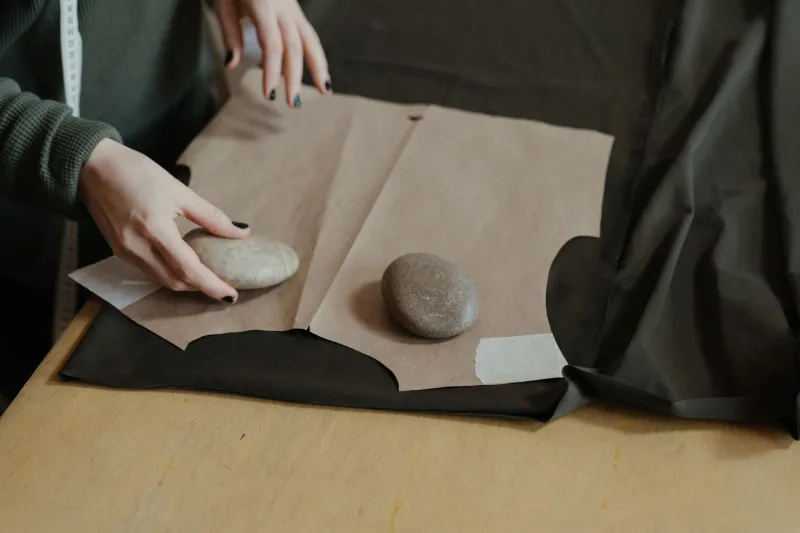
Pattern storage is usually a choice between a tidy drawer and a chaotic pile. For master blocks, aim for a middle ground. Keep the original block pieces flat in a large envelope or a clear plastic wallet, labelled clearly. Keep the annotated toile nearby if you have room — hanging it in the airing cupboard is not ideal, but folded into a labelled bag is fine.
A simple versioning system works wonders. Mark the block as version one, then version two after a substantive change. Keep the old one. You may find that a sleeve adjustment you disliked in summer makes sense again in winter layering. You may also find that your style has changed: a closer bodice that felt right a few years ago now feels too restrictive for the way you actually dress. That is not a reason to throw the block away. It is a reason to make version three.
When your body changes, the block does not break
Bodies change. Posture shifts, weight moves, shoulders round or open up, and the clothes we need change with them. A master block is not a verdict on your body; it is a snapshot. When something stops feeling right, revisit the toile before you draft a new block from scratch.
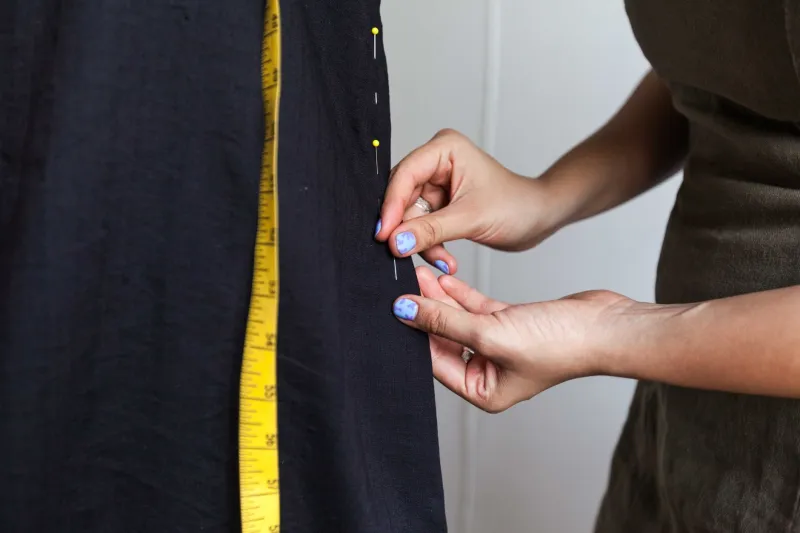
Try the old block on over the undergarments you wear now. Pin out the excess. Let out what needs letting out. Check the shoulder and the crotch curve first, because small changes there often solve larger-looking problems elsewhere. Then transfer only the changes that are genuinely structural. If you have simply changed your preferred ease, note that separately. A block can have a fitted version and a relaxed version without becoming two entirely different projects.
A five-minute seasonal audit
Twice a year, take the blocks out and give them a quick once-over. Hold them against a garment you wear often. Check the grainlines, the seam allowances and the labels. Look at your notes and ask three questions: what did I change last time, what did I ignore, and what do I want to try next?
This is also the moment to update the practical details. If you have started adding pockets to everything, note a pocket placement on the trouser block. If you prefer a slightly lower neckline for winter layering, mark it. If you have finally accepted that you need a little more room through the upper arm, write it down in language future-you will understand.
Adapt, don't restart
Once your blocks are trustworthy, pattern hacking becomes far less nerve-racking. A shirt collar, a gathered sleeve, a paper-bag waist or a dropped shoulder can all be drafted from a known starting point. You are not guessing from the beginning; you are making a deliberate variation from a fit that already works.
That is the quiet pleasure of a master block library. It is not a museum of perfect patterns. It is a working archive of your own making — slightly grubby, heavily annotated and entirely yours. Draft once, then keep the conversation going.