Borrow the Wardrobe, Not the Tape Measure: Sewing Fitted Presents in Secret
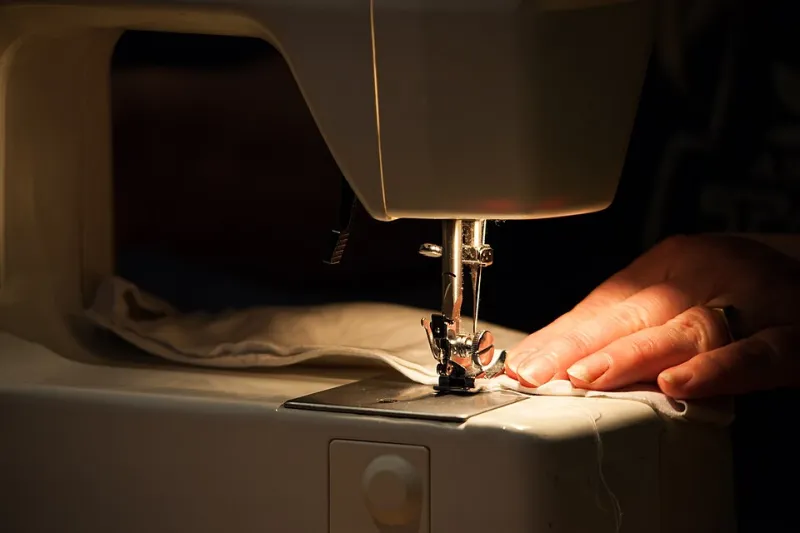
There is a particular kind of optimism that arrives in November. It smells faintly of mulled something, sounds like the sewing machine at ten at night, and involves convincing yourself that you can make a fitted garment for another human being without ever putting a tape measure near them. Secret sewing is a lovely idea. It is also, if we're honest, a small act of guesswork dressed up in ribbon.
But guesswork can be done beautifully. If you go into a stealth project knowing which measurements you can borrow, which silhouettes forgive, and which fittings genuinely cannot happen behind a closed door, you'll end up with something that stands a real chance of being worn — not just photographed on Christmas morning and quietly folded away by January.
Start with the clothes they already love
Your best fit model is hanging in their wardrobe. The trick is getting near it without raising eyebrows.
Next time you're round for a cup of tea, pay attention. What's on the back of the chair? What do they reach for when the heating's playing up? A favourite cardigan, a well-worn shirt, a pair of pyjama trousers that have seen things — these tell you more than any conversation about numbers ever will.
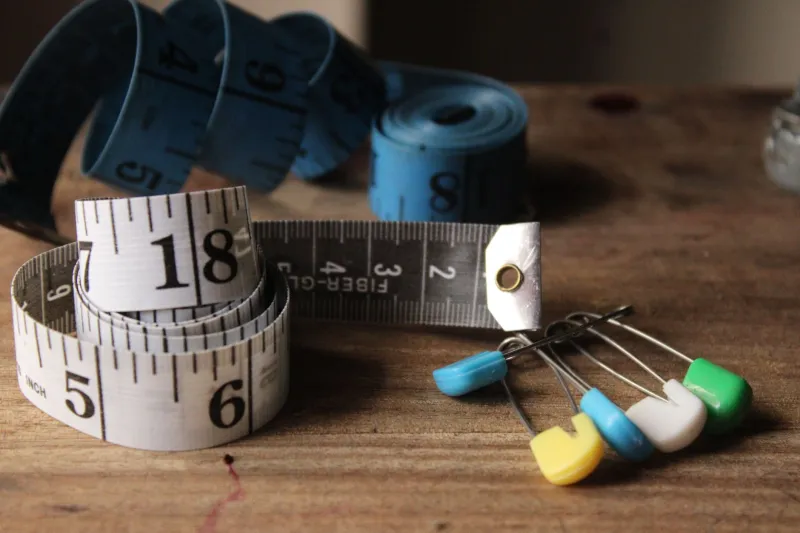
If you can borrow a garment briefly ("I wanted to check the label, it's a lovely knit — where's it from?"), measure it flat:
- Chest or bust — armpit to armpit, doubled.
- Waist — across the narrowest point, doubled.
- Hip or hem — across the widest part of the lower garment, doubled.
- Back length — from the base of the collar to the hem.
- Sleeve — shoulder seam to cuff, plus the underarm seam for a set-in sleeve.
Then add the things a tape measure can't tell you. Is the fabric a stable woven or something with a bit of stretch? Has it been washed to within an inch of its life and shrunk? Does the shoulder seam sit where it should, or has it crept down over the years? A garment that's been lovingly worn for eight years is a record of how someone actually likes their clothes to feel — not how a pattern company thinks they should.
The numbers you actually need, and the ones you can fudge
For a top, three measurements genuinely matter: shoulder width, a chest or bust circumference, and body length. Get those roughly right and you can get away with a great deal elsewhere.
For a skirt, it's waist plus hip plus length. For an unstructured jacket or a kimono-style layer, add roughly 10–15cm of ease to whatever you've borrowed and call it a design feature. For a scarf, a bag, a cushion, an apron or a pair of oven gloves, you can stop worrying entirely and enjoy yourself.
What you can safely fudge: exact hem length (let it down, take it up — easy), sleeve cuffs (turn them), and anything gathered, elasticated or tied. What you shouldn't fudge: dart placement on a close-fitting bodice, the crotch curve on trousers, and any garment where the shoulder must land precisely on the shoulder. These are the measurements that need a body in the room.
Choose shapes that forgive a best guess
Stealth sewing is a genre, and it has a house style. Wrap tops, A-line skirts, elasticated waists, raglan sleeves, boxy tunics, drawstring bags, pinafores, loose pyjama bottoms with a generous tie — these designs all have slack built into them by nature. A wrap top that's 3cm off at the waist is a wrap top that ties slightly differently. A tailored blazer that's 3cm off is a returns label.
Two specific tactics worth adopting:
Build in generous seam allowances. 2cm instead of 1.5cm on side seams and centre back, and you've bought yourself a free size up or down when the moment comes. Mark them clearly on your pattern so a future-you (or a future recipient) can find them.
Make the closures adjustable. Ties instead of buttons, a two-button placket instead of a fixed one, a drawstring in a casing. If you can't do a fitting, give the garment its own adjustment mechanism and let the wearer do the work.
The toile you can't try on anyone
Here's the honest bit: you can't do a proper fitting in secret. What you can do is make a toile and audit it ruthlessly against the borrowed garment.
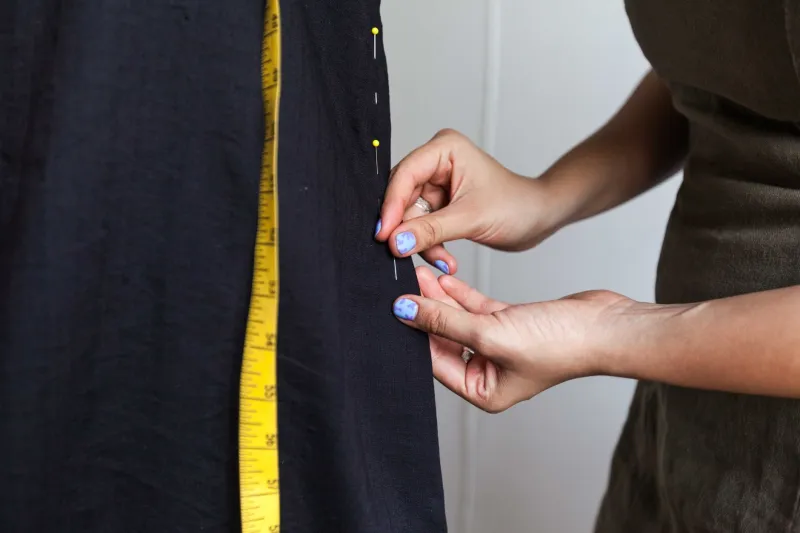
Lay the toile flat on the bed and lay the borrowed favourite on top of it, matching centre front to centre front. Where does the toile run wide? Where does it run short? Pin the difference and note it. If you have a housemate — or a dress form — of roughly similar build, use them for a sense of proportion, but don't over-trust the result. A dress form doesn't have a slouch, a shoulder that sits lower on one side, or a preference for her cardigans baggy.
If you can, make the toile in a wearable fabric and keep it. A plain calico version of a wrap top is still a useful top; a plain calico version of a tailored jacket is firelighters. Choose projects where the mock-up has a second life.
The fitting session voucher
This is the move that turns a hopeful handmade gift into a genuinely bespoke one. Alongside the wrapped garment, tuck in a small card: a fitting session, tea included, at a date of their choosing, with minor alterations promised on the house.
It's honest, it's charming, and it relieves the pressure enormously. You've acknowledged that the first version is a beginning, not a verdict. Most people are delighted by it; a few will quietly take you up on it in the new year, and those tweaks — taken in at the side seam, a hem shortened by two centimetres, a sleeve cuff turned back — are usually the difference between a garment that lives in a drawer and one that becomes a favourite.
Write the voucher in pencil. Adjustments are easier to promise when there's room to rub things out.
What to avoid entirely
Some projects are not secret projects. Fitted trousers, structured jackets, anything with a zip fly and a precise crotch curve, corsetry, close-fitting dresses in non-stretch fabric — these all need a body, a mirror and preferably a second opinion. Save them for a birthday when you can measure in the open, or book a fitting with them in advance and call it part of the gift.
Instead, lean into the things handmade gifts do best: a robe in a fabric they'd never buy for themselves, a pair of pyjama bottoms in brushed cotton, a quilted gilet that's deliberately roomy, a lined tote with a pocket exactly the right size for their phone. Generous, forgiving, and finished before the wrapping paper runs out.
Secret sewing is never going to be an exact science. It is, though, a rather lovely form of attention — and a garment made with someone's actual wardrobe in mind is more than halfway to fitting before it's even cut out.