The After-Dinner Waistband: Drafting Festive Clothes With a Little Room to Spare
Christmas dinner is a fitting test disguised as a meal. You stand at the mirror, everything sits neatly, then you sit down, reach across the table, and discover that your waistband has opinions. The good news is that a bespoke pattern can plan for this. Not by sizing up the whole garment and letting it hang like a sack, but by building a small, discreet allowance exactly where the day demands it.
The Waistband Is a Moving Target
Most patterns are tested in a standing position. Real life is more varied: perching on a sofa, folding yourself into a car, leaning over the oven, and settling into a dining chair for the long haul. At Christmas, add a proper British spread and a determination to try everything. The waistband is the part that notices first.
The aim is not an elasticated waist in disguise. It is a tailored waistband with a little engineered flexibility, so the front stays clean and the back or sides quietly give when needed. Done well, nobody sees the mechanism. They just see a skirt or pair of trousers that somehow still looks polished after the cheese course.
Work Out Your Second-Helping Allowance
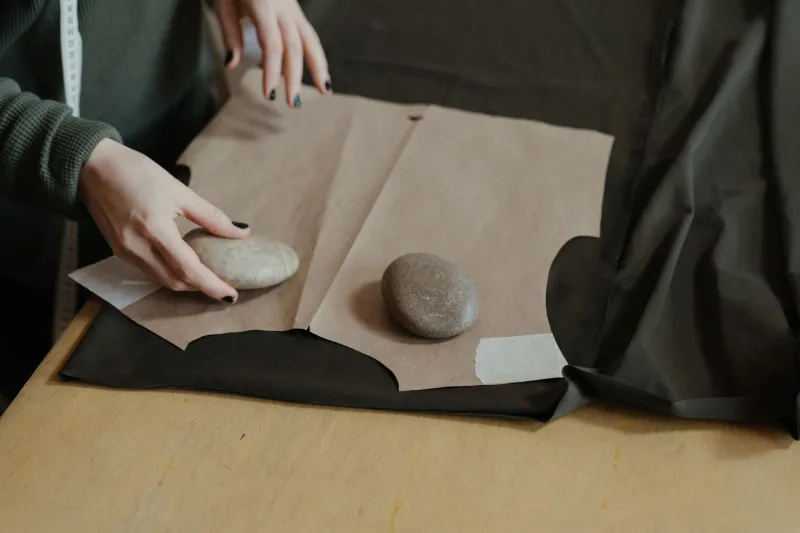
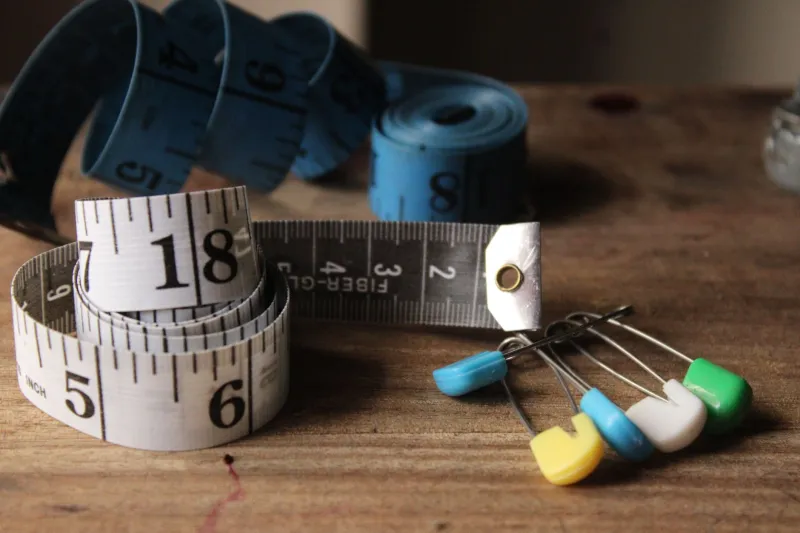
Start with a calico toile and measure your natural waist twice: once standing, once seated after a normal meal. The difference is your guide, not a number to guess. For most people, 2cm to 4cm of extra waist circumference is enough for festive comfort; a very fitted high-waisted skirt may need nearer the lower end, while trousers worn for a long day may want a touch more.
Keep the hips and seat as drafted. This is a waistband conversation, not permission to add ease everywhere. Mark the waistline on the toile, sit down, and see where it digs in or rides up. If the waistband curls over when you sit, the depth or the interfacing may be the issue as much as the circumference.
Hide the Give in an Elastic Panel
One of the neatest solutions is a concealed elastic section at the back waistband or set into each side seam. Draft the waistband in sections: a stable front piece, then side or back pieces that contain a channel for soft 3cm elastic. Interface the front only, so it keeps its crisp shape, and leave the elastic sections softer.
Anchor the elastic at both ends with a few rows of stitching, then add a lining or facing to cover the channel. The elastic should gather the band slightly when relaxed, not pucker the whole waist. On trousers, a back panel of elastic is often enough. On a skirt, two short side panels can look especially tidy and distribute the give without pulling the centre front off grain.
Make Adjustable Side Tabs Work Hard
For a more tailored look, try an adjustable side tab. Draft a small extension at the side waist that overlaps inside the band, with two buttons or strong snaps set 2cm apart. The inner tab can be made from firm cotton or a scrap of grosgrain ribbon, and the outer band gets a clean buttonhole or bound opening.
This works beautifully on high-waisted skirts and wide-leg trousers because it looks like a deliberate design detail rather than a compromise. It also lets you fine-tune the fit through the winter: slightly looser for the feast, neatly cinched for a Boxing Day walk. Keep the buttons flat and smooth so they do not press into a chair back.
Shape, Depth and a Softer Finish
A curved waistband is usually kinder than a straight rectangle, especially if you are seated for long stretches. Draft it to follow the body rather than standing away at the centre back. Use a light interfacing on the front and a softer one, or none at all, on any elastic sections.
Watch the bulk. Trim seam allowances inside the waistband, grade them where you can, and avoid thick turnings right at the side seams. A lining or clean facing will make the inside feel as considered as the outside, and it gives you a place to hide elastic channels and tab anchors. Belt loops are optional, but if you add them, place them clear of any adjustable openings.
The Pudding Rehearsal
Before you commit to the final fabric, wear the toile for a proper test. Sit at a table, reach forward as if for the serving dish, stand up, climb stairs, and put on a winter coat. Try it with tights and with a tucked-in jumper. If you can, test it after a Sunday roast rather than on an empty stomach. Mark any pressure points with tailor's chalk, then adjust the waistband before cutting the good cloth.
This rehearsal is where bespoke patterns earn their keep. You are not guessing how the garment will behave; you are watching it behave. A small change to the tab spacing or a slightly deeper elastic channel can be the difference between a garment you tolerate and one you reach for all season.
Wear It Beyond the Feast
A festive waistband with hidden flexibility is not just for Christmas Day. It is for the office party, the long train home, the Boxing Day buffet, and every cold-weather meal where you would rather think about the company than your waistband. Because the front stays tailored and the give is concealed, it works with a silk shirt in December and a chunky knit in January.
Draft the allowance once, fit it properly, and you have a pattern piece you can reuse on winter skirts, trousers, and even pinafores. That is the quiet promise of a bespoke pattern: it can look smart on the hanger, behave beautifully at the table, and still feel like yours when the plates are cleared.