Before the Shears Come Out: Three Real Outfits That Test a Pattern's Worth

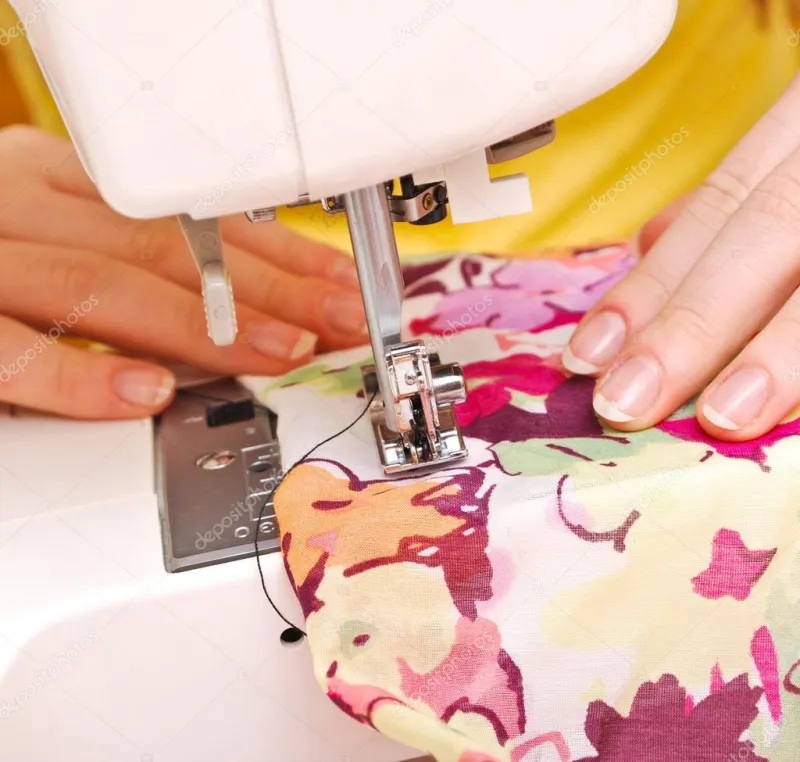
Photo: David Smith , CC BY-SA 2.0, via Wikimedia Commons
I am going to suggest something that sounds almost rude to a keen dressmaker: before you cut, earn the right to cut.
Not with a mood board. Not with a Pinterest folder full of linen co-ords. With three outfits. Real ones, from your actual week, that you can picture in detail and would genuinely leave the house in.
If you cannot name three, that is not a moral failing. It is useful information, arriving at exactly the right moment — while the fabric is still a rectangle and the pattern is still a possibility.
The promise, in plain terms
Here is the rule. Before the shears come out, write down three occasions in the next fortnight where this garment will be worn, and what it will be worn with.
Not "a nice dress for summer". Something with a bit of specificity: the Saturday market run with the jeans jacket, boots, and the tote with the broken strap that I keep meaning to fix. A Tuesday in the office with the navy trousers and the loafers that need reheeling. Sunday lunch at my sister's, under the grey cardigan, with the ankle boots.
If you can describe the outfit down to the shoes, you will wear it. If you are describing an idea of a person rather than a day in your diary, you probably will not — and no amount of beautiful topstitching will rescue that.
Why three, and not one
One outfit is easy. One outfit is a novelty, a party, a wedding, a photo. Two is a coincidence. Three is a pattern of behaviour.
Three forces you to notice the boring stuff: whether the garment works in the cold, whether it survives a commute, whether it looks right with the shoes you actually own rather than the ones you would like to own. It is the difference between a garment you admire and a garment you reach for.
It also quietly exposes the patterns that only work in one season, or with one silhouette, or on one particular day when the weather cooperates. That is not automatically a reason to abandon a project. It is a reason to know.
Fabric: the part where the plan usually collapses
The three outfits are only as honest as the fabric you have chosen.
A pattern tested at the pattern table is tested in an imaginary cloth. A dart that behaves in a stable cotton may pull and sag in a fluid viscose; a sleeve that hangs nicely in a light wool will feel entirely different in a crisp poplin. Before you commit, drape your fabric over the pattern pieces and ask how it behaves rather than how it looks.
And be honest about UK weather. A linen top that photographs beautifully in July is a garment for about eleven days a year in this country. That is allowed — but if you are planning three wears in a fortnight, the calendar has to agree with you.
Layers, shoes, and the British facts of life
Most of the small fitting decisions on this site come back to the same question: what is going on above and below the garment?
Add the layer you will actually wear over it. A close-fitting sleeve will fight a cardigan; a dropped shoulder will not sit under a coat. Check the hem against the shoes you own — a midi length that looks graceful in flats can look entirely different with chunky boots, and vice versa. If you are drafting a high neckline, picture it under the scarf you never take off between October and March.
This is not a capsule wardrobe lecture. I promise. Nobody is asking you to own forty pieces in the same four colours. The point is not minimalism; it is compatibility with a life that already exists.
The mending question
Here is one worth asking out loud: if this garment needs a small repair in a year — a worn elbow, a strained seam, a hem coming down — would I fix it?
Some makes invite mending. They are the ones made in a fabric you love, with seam allowances you can actually get at, in a shape that still pleases you in a slightly tired state. Others are transactional: finished fast, worn twice, quietly retired.
If you already know you would not bother to repair it, that is a strong hint that the three outfits are doing a lot of imaginative work. Rethink before the cutting mat, not after.
The fitting details that quietly decide everything
So much of whether a make becomes a favourite comes down to centimetres nobody will ever compliment you on.
- Shoulder position. A shoulder seam half a centimetre off can make a garment feel like it belongs to someone else. Test it on a toile.
- Armhole and sleeve length. Sleeves that finish exactly at the wrist bone, or a fraction above, get worn. Sleeves that finish awkwardly get pushed up and stay pushed up.
- Waist position. Check it while seated. If the waistband digs when you sit down, you will not wear it to anything involving chairs — which is most things.
- Ease at the hip. Enough to walk briskly for a bus. Always that.
- Where the pockets sit. Too low and your hands stop reaching for them. Too high and they look decorative rather than useful.
None of this needs to be dramatic. A pinned tuck at the shoulder, a slightly widened hip, a sleeve shortened by two centimetres — these are the differences between a garment that is technically finished and one that is genuinely worn.
When to break the rule
There are legitimate exceptions. A piece you are making purely to learn a technique, a costume, something wildly experimental that exists for its own sake, a gift for someone whose week you cannot map. Fine. Break the rule deliberately and enjoy it.
What I would gently push back on is the default: buying a pattern, buying fabric, and only afterwards asking where it fits. That is how beautiful, careful, hard-worked garments end up on the rail at the back of the wardrobe, still with the pins in the label.
Three outfits. Named, dated, paired with shoes. It takes ten minutes and it will change how often the things you make actually leave the house.